


When a Broker Leaves, Does the Client’s History Leave Too?
25 October 2026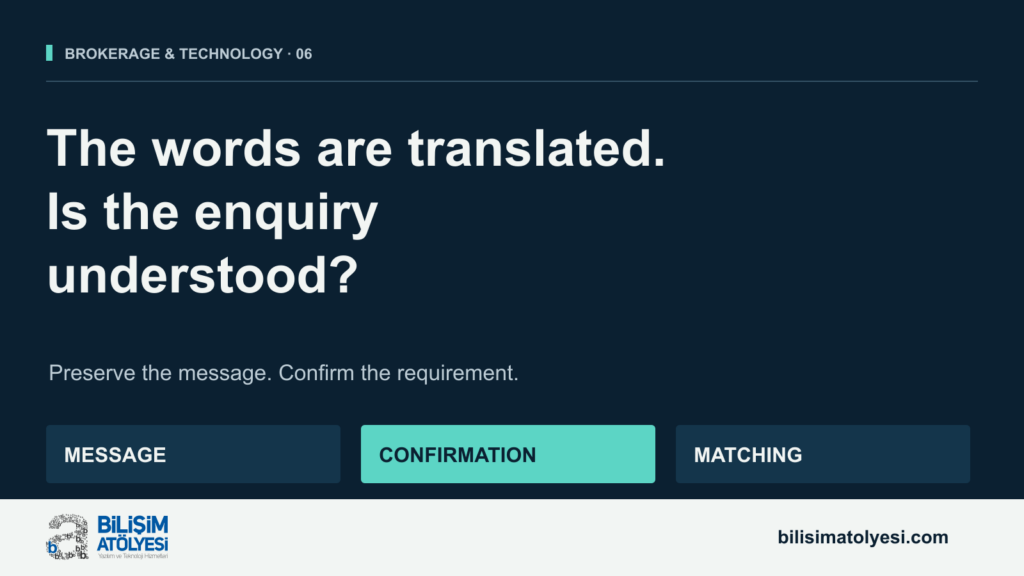
“I am looking for a yacht ready for the summer.”
You can translate that sentence from Russian, Arabic or Turkish. But does the client mean delivery at the beginning of summer? A yacht with maintenance completed and available for immediate use? Or a vessel ready in a particular country for a planned cruising programme?
The translation may be clear while the commercial requirement remains uncertain. A broker’s work continues beyond finding equivalent words. The team needs to distinguish what the client said, what it understood and what still requires confirmation.
In a multilingual brokerage, the meaning that affects the client’s decision must travel through the team alongside the message. A CRM can provide the record structure that makes enquiries in different languages usable within the same sales process.
Enquiries in Russian, Arabic and Turkish can share a common structure
A website enquiry may arrive in Russian, an advertising lead form in Arabic and a telephone conversation in Turkish. Even if the team works in English, the detail expressed in the client’s language should remain available. Translating every message into one language does not, by itself, create a comparable buying brief.
A useful record shows the yacht segment, intended use, stated budget and currency, time frame, conditions affecting the purchase and points that remain unresolved. These fields should retain the same meaning regardless of the language in which the enquiry arrived.
Nationality, language and a telephone country code should not become shortcuts for estimating budget or purchase intent. Ask the client about their preferred language. Assess the requirement through the conversation and the conditions that have actually been established.
The translation should not replace the original message
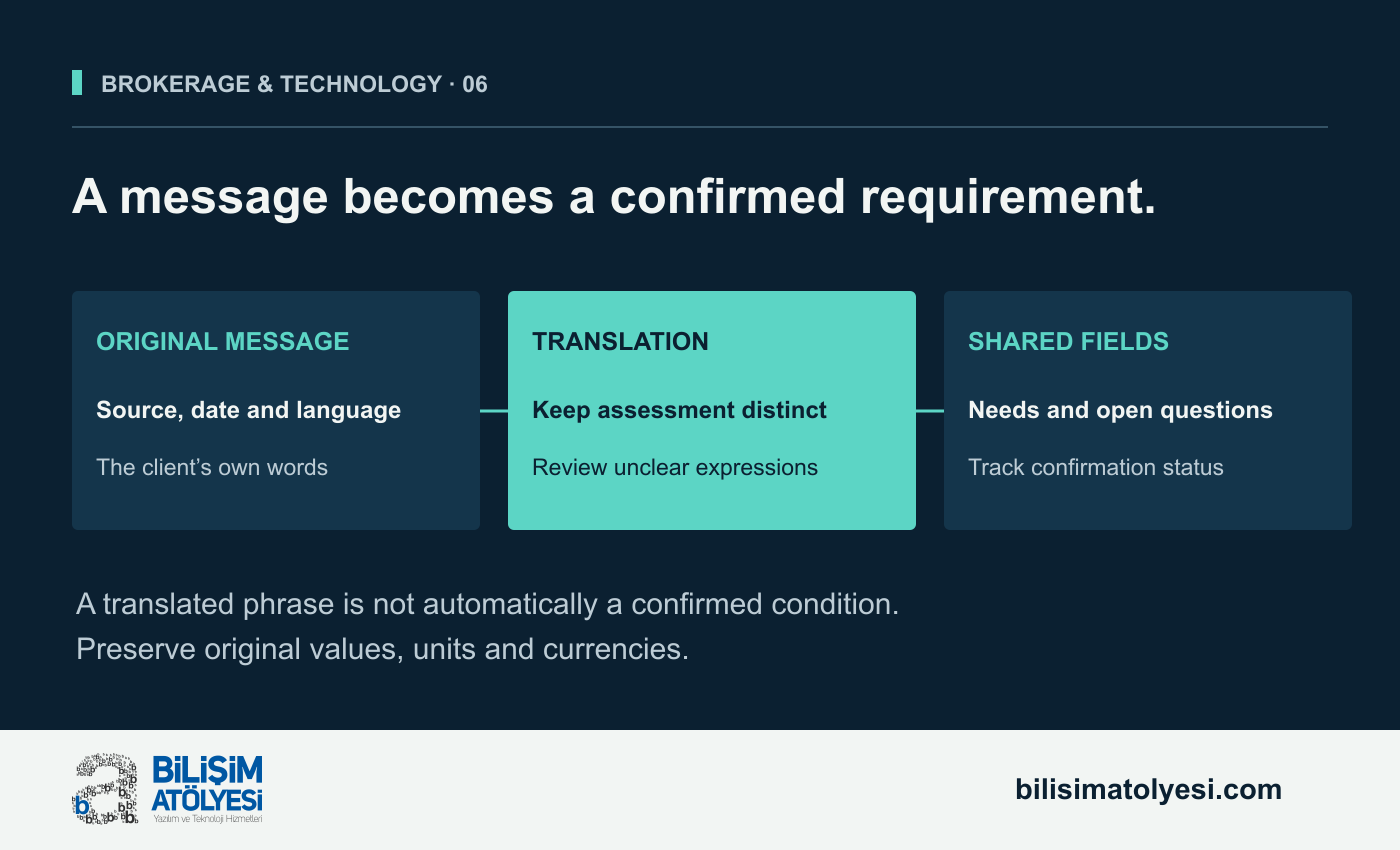
Three layers can be kept distinct: the client’s original statement, its translation into the working language and the broker’s commercial assessment. If a question arises later, the team should be able to see what supported the decision.
Suppose the client says, “We could proceed if we find a solution for my current yacht.” The translation may preserve that ambiguity. The broker’s assessment might be that a purchase could depend on selling the existing vessel. Until checked with the client, that assessment should not become a confirmed purchase condition or an accepted trade-in arrangement.
The record can show the source channel, date, language and whether the translation has been reviewed. A material correction should retain its context, with the new information and confirmation source linked to it. A short summary in the company’s working language should not become the only surviving account of what the client said.
Which questions make “ready for summer” useful?
When, and where? “Summer” is neither a delivery date nor a location. Clarify the intended start of use, delivery expectations and flexibility. The yacht’s current location and the place where the client expects to receive it are separate facts.
Ready to what standard? Ask what the client expects to be completed. Their equipment, maintenance or preparation requirements should remain distinct from the yacht’s verified current condition. A listing described as “refitted” or “ready to go” does not answer those questions by itself.
Within which commercial scope? Record the currency, the costs the figure is intended to cover and any uncertainty about price or tax status. A translation tool should not turn an unclear phrase into an “all costs included” condition.
These questions are not a reason to subject the client to a long interrogation. They clarify the matters that change the next step before the team sends unsuitable options or creates different expectations about an offer.
Keep units and currencies attached to the information
A client may discuss length in feet while the broker uses metres. The interface can use a common unit for comparison, but the original value and unit should remain available. The same principle applies to money. A converted display value does not mean the client stated or committed to a budget in that currency.
If a converted amount is shown, its exchange rate and date should be understandable, while the client’s stated figure remains separate. Terms such as “net”, “gross”, “delivery” and “maintenance included” also need their context. An unknown scope marked for confirmation is more useful than a completed field that implies certainty.
Yacht names, model codes and equipment terms require consistency. Google Cloud Translation’s documentation describes glossaries for consistent treatment of specialist terms and named entities. In brokerage, an approved terminology list can support that consistency. It cannot establish the client’s commercial intent or resolve an ambiguous condition by itself.
Speaking the language is one part of the right match
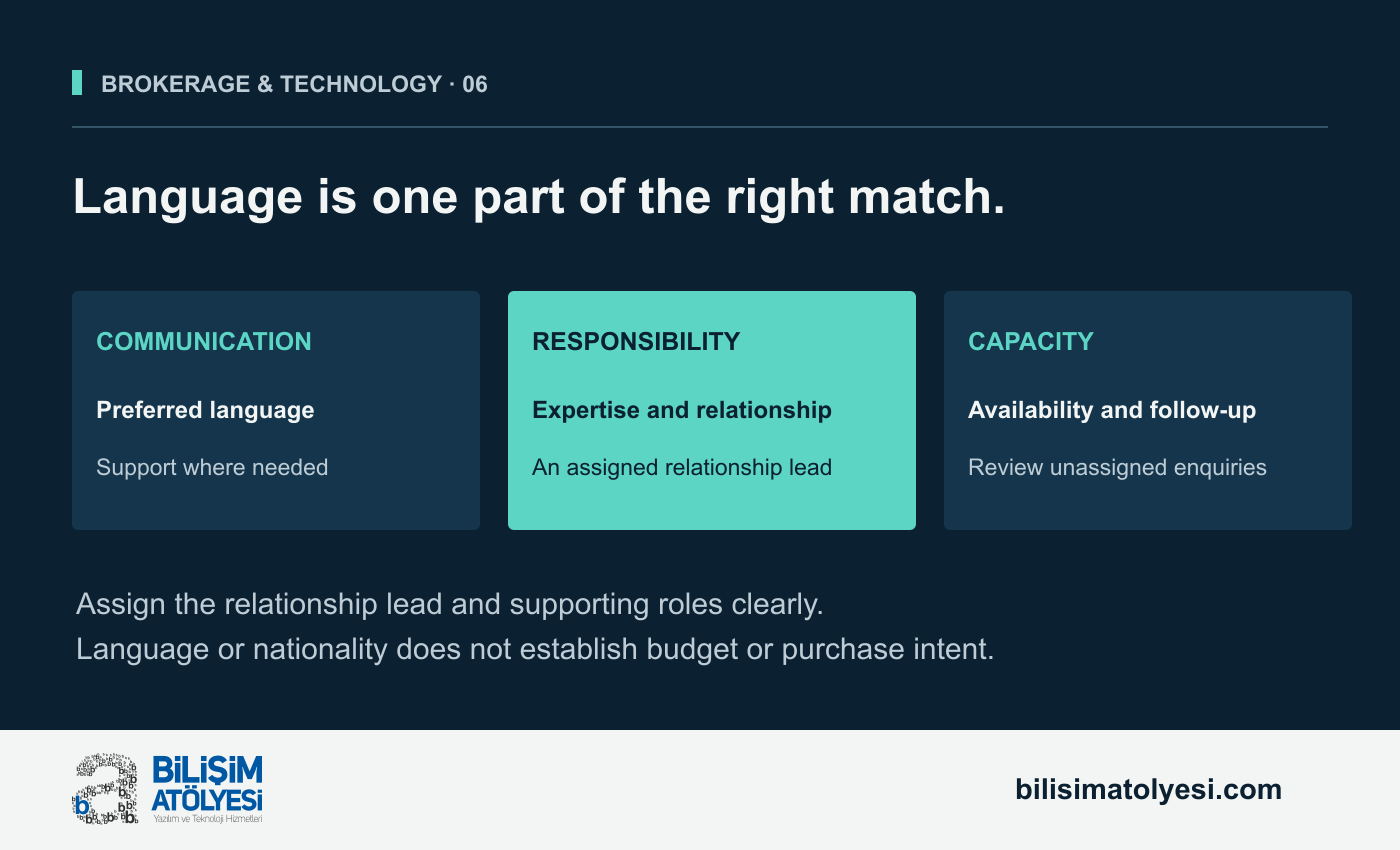
A Russian-speaking team member does not have to manage every Russian-language enquiry alone. Yacht segment knowledge, the existing relationship, responsibility for an open file, availability and follow-up capacity can also inform assignment.
Microsoft’s Dynamics 365 Sales documentation describes assignment using seller attributes, including language, alongside capacity and availability. Our proposed brokerage workflow considers these factors together with the company’s expertise and relationship responsibilities.
Where appropriate, the broker who understands the segment can manage the relationship while a colleague provides language support. The relationship lead, translation or technical support roles, and the person responsible for the next contact should be clear. If no suitable match is available, the enquiry should remain visible for review rather than disappear between teams.
An Arabic enquiry also needs a usable interface
Multilingual work extends to how the record is displayed. An Arabic message written from right to left may contain a model name in Latin characters, a price, a telephone number and a measurement. The original text and these values need a readable presentation so the record can be reviewed later.
The language used to submit a message may also differ from the client’s preference for the next conversation. An assistant may have completed the form, or another decision-maker may join the discussion. Communication preferences, participants and a suitable contact time should be updated through confirmation rather than assumption.
A response or draft translation may be prepared automatically. Statements about price, delivery and technical scope need a review and confirmation step where they affect a decision. Content sent to an external translation service should also be limited to what the task needs. Every attachment or private exchange should not be passed on automatically.
A good handover does not make the client explain the same need again
Imagine an enquiry beginning in Russian, passing to an operations team working in Turkish, then continuing with an English-speaking broker. The handover needs the original request, a usable summary, confirmed fields, outstanding questions and the next action together.
Delivery in June might have been confirmed while the delivery location remains open. The next broker should know which condition can be relied on, what to ask again and which language to use. If each person overwrites the previous account with a new summary, the chain of meaning can break even when the translated words appear to survive.
At Bilişim Atölyesi, we approach yacht-sector CRM, web forms, listing technologies and API integrations as parts of the same enquiry workflow. Depending on the project, multilingual records, common requirement fields, broker assignment rules and follow-up screens can be designed together.
Translation opens the conversation. A requirement that is understood and recorded properly lets the team continue it.
Discuss how enquiries in different languages can reach the right people in your brokerage.
Previous article: When a Broker Leaves, Does the Client’s History Leave Too?
All articles in Brokerage & Technology.