



Why every company needs an MCP strategy
29 October 2026
Every week in Tech Notes, we pick a few developments from around the world that directly affect the digital infrastructure of businesses, summarise them briefly and ask the real question: What does this mean for your business?
1. Google opens Search and Gemini to business apps
On 28 October Google announced its “Connected Apps” platform. Businesses will be able to connect their own apps and services to the AI features in Google Search and to the Gemini assistant. A user can, for example, complete a design or shopping task directly through the assistant without opening the app. The connection runs on MCP (Model Context Protocol), the standard that has recently become the common language of AI integrations. For now the platform is in open preview in the US, with a waiting list.
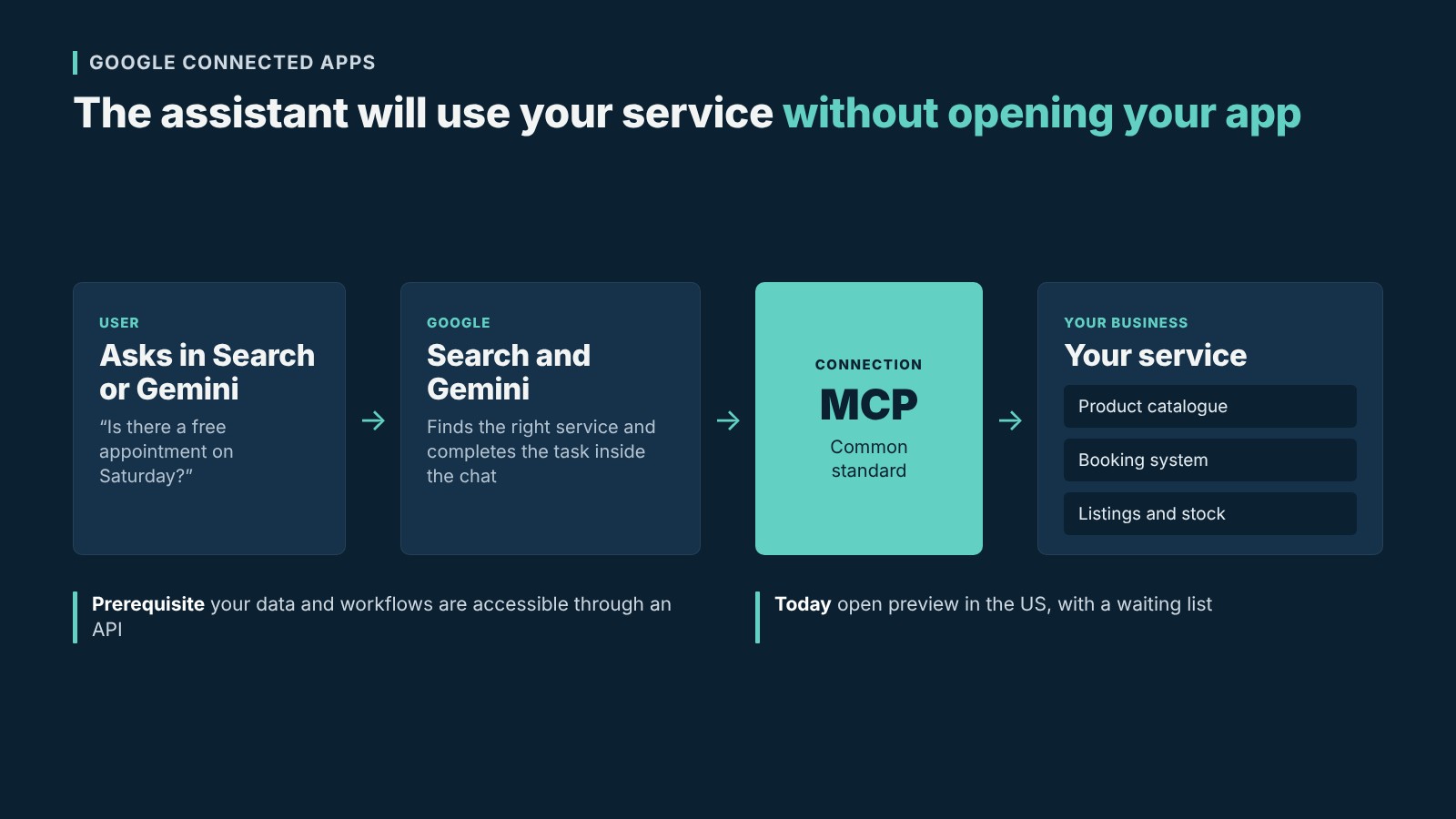
Our take: For years the answer to “How do I show up on Google?” was SEO. From now on a new question joins it: “Can AI assistants use my service?” The prerequisite is that your data and workflows are accessible through an API. If your listings, product catalogue or booking system live only on a web page, connecting to this new channel will be hard. It will take time to spread in Türkiye, but building the foundation today with APIs and well-organised data turns the job into an integration of a few weeks when that day comes.
Source: TechCrunch
2. Ads inside AI answers go global
Alongside its third-quarter results, Google announced that it will take ads in AI Mode outside the US for the first time, and ads inside AI Overviews are reaching more users and more searches. According to Google, sponsored product listings in AI Mode get the same click-through rate as organic results. Which countries will be included, and when, has not been announced yet.
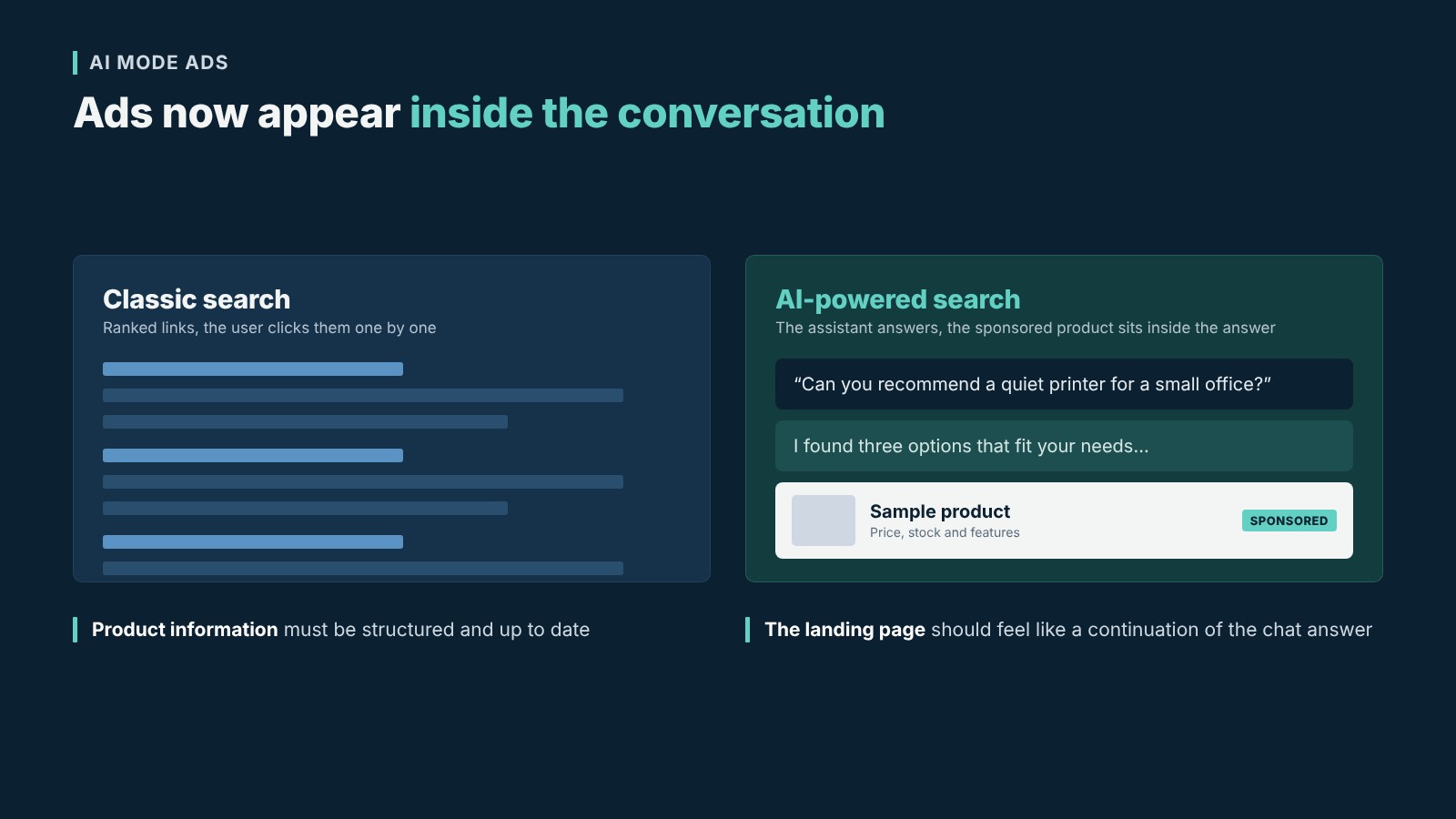
Our take: Search results are turning from “ten blue links” into a conversation, and ads are moving into that conversation. For businesses with a Google Ads budget there are two practical consequences. First, your product and service information (price, features, stock, images) must be structured and up to date so that AI can describe you correctly. Second, the page a visitor lands on from an ad should feel like a continuation of the answer they got in the chat; a generic home page is no longer enough.
Source: TechCrunch
3. Yacht brokerage enters the AI era
The California Yacht Brokers Association (CYBA), which has represented licensed yacht brokers since 1975, has partnered with the AI-powered marketplace MarineSource. Members will get advanced listing tools, real-time market data and verified sold-boat / comparable sales data, while buyers get AI-powered search. The association’s leadership stresses that these tools cannot replace local market expertise.
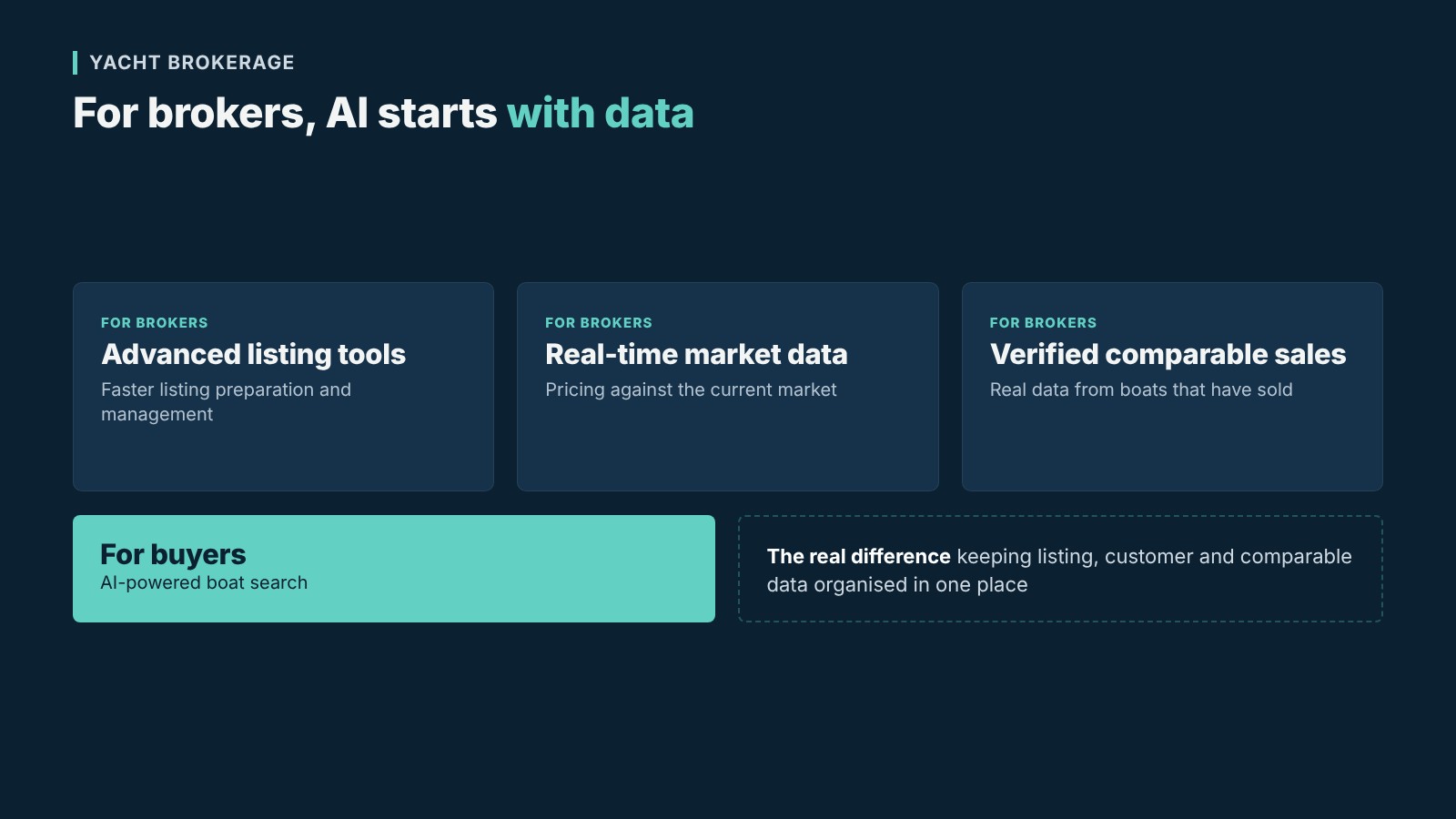
Our take: For us, the most important part of this news is “verified sales data”. In brokerage, pricing and negotiation rely on trustworthy comparables, while scattered portals and outdated listings weaken that trust. AI is only as good as the data behind it. A CRM that keeps a boat’s history, price changes and conversation notes in order is the prerequisite for getting real value from these new tools. We cover this topic in detail in our Brokerage and Technology series.
Source: The Log
In brief
AI costs in CRM are on the agenda: HubSpot introduced spending limits and flexible credit options for its AI features, while Salesforce named Demandbase as the data partner for its sales agent Hunter. The value of AI agents depends on the quality of the customer data they are fed and on keeping costs under control. (CX Today)
If you would like to talk about how these developments will affect your business, write to us.