


Which Systems Does a Yacht Brokerage Actually Need?
20 November 2026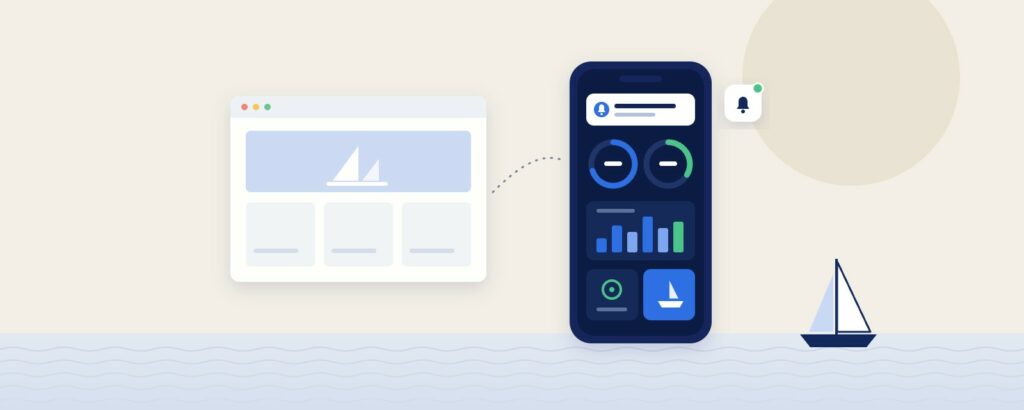
When a yacht company decides it needs an app, the first brief often sounds the same. Take the website, put it on the phone, add a logo to the home screen. It feels like a sensible starting point, because the content is already there and the brand is already defined.
The trouble is that an app built this way rarely gets opened twice. A visitor who wants to browse listings or read about a shipyard will happily do it in a browser. Downloading an app, giving it space on the phone and allowing notifications is a bigger commitment, and people only make it when the app gives them something the website cannot.
So the more useful question is not how the website will look on a phone. It is what someone will do in the app every week that they would never do on the website.
A website is visited, an app is used
A website serves people who are still deciding. They arrive from a search, an advert or a shared link, look around and leave. Its job is to explain, to persuade and to be found. That is why websites are built around pages, SEO and clear calls to action.
An app serves people who have already decided. They are owners, members, crew or regular clients, and they come back with a task in mind. They want to check something, book something, receive something or be told when something changes. Their visit is short and repeated, often on the move and sometimes with a weak signal at the marina.
These are two different relationships, and they need two different designs. When an app copies the website, it serves the first group badly on a smaller screen and gives the second group nothing new.
What only an app can do well
The case for an app becomes clear when it uses what the phone offers and the browser does not. In the yachting world, a few of these stand out.
- Notifications that matter. A price change on a saved yacht, a confirmed service appointment, a race start time moved by an hour. An email can be missed, a push notification usually is not.
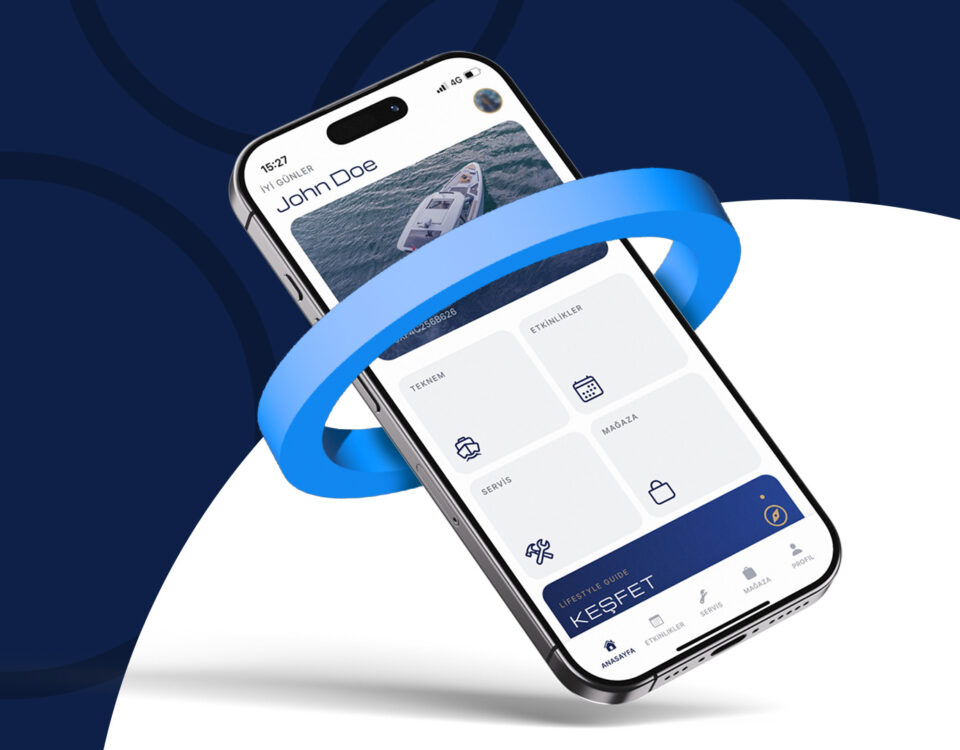
- A personal space. The owner sees their own boat, their documents, their service history and their invoices, without searching through a public site.
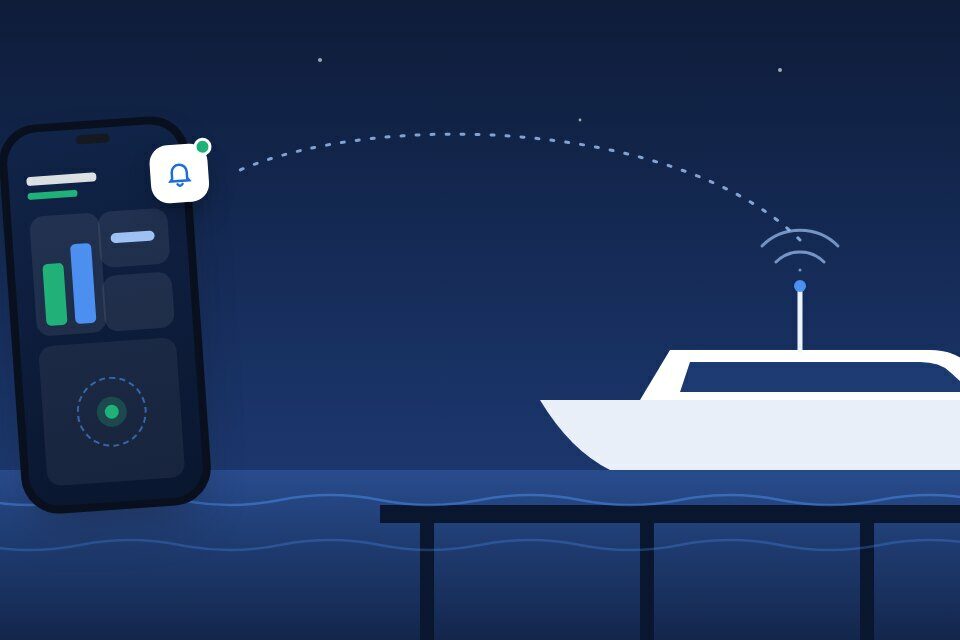
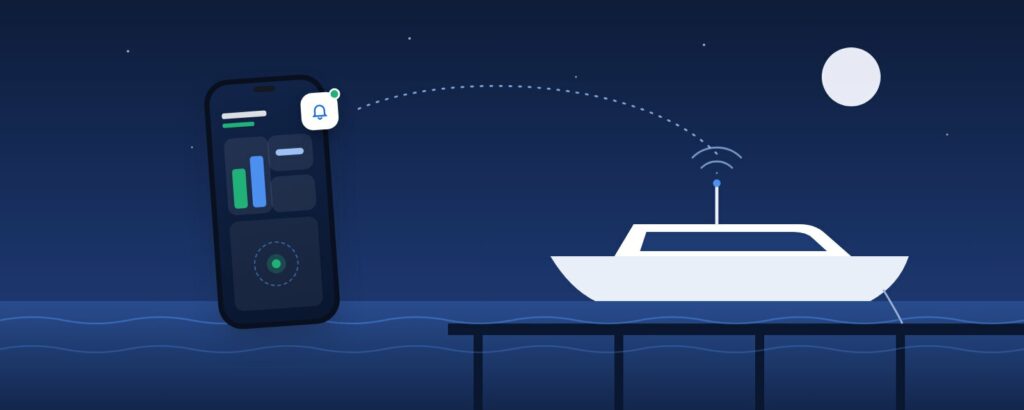
- Live data from the boat. Fuel and water levels, battery status, engine hours or alarms can be followed from home when the app is connected to the boat’s systems, as in our Boat Metric dashboard.
- Working offline. Checklists, manuals and safety documents should open on the pontoon or at sea, where the connection drops.
- Quick actions. Requesting a lift-out, reporting a fault with a photo or confirming a charter handover should take a few taps, not a contact form.
None of these is about presenting the brand. They are about saving someone time on a task they repeat. That is what earns a place on the home screen.
Start with the people who will open it
Before deciding on screens, it helps to name the users and the one or two jobs each of them has. A yacht company usually has more than one audience, and they rarely want the same thing.
- Owners want to know the state of their boat and what is planned for it.
- Prospective buyers want saved searches, alerts and an easy way to reach their broker.
- Club members and racing crews want schedules, entries, results and last-minute notices.
- Brokers and service staff want to update a record or a job while they are standing next to the boat.
Trying to serve all of them in a first version usually produces an app that serves none of them well. It is better to choose the group that will use it most often, solve their main task properly and add the others later.
The app and the website should share one source
Saying the app is not a copy of the website does not mean the two should live apart. The opposite is true. If listings, boat records, events or documents are entered once in the website’s admin panel and again for the app, the two will soon disagree, and the team will spend its time keeping them in step.
A healthier setup has a single back end, with the website, the admin panel and the app all reading from the same data through an API. The website shows that data to the public. The app shows a personal, task-focused view of it to people who have signed in. The content is shared, the experience is not.
This also keeps the cost reasonable. Modern cross-platform tools let one codebase serve both iOS and Android, and the same structure can extend to a tablet in the saloon or a TV screen at a showroom or a boat show when there is a real reason for it.
Signs that you need an app, and signs that you don’t yet
An app is a good investment when some of the following are true.
- You have a group of people who come back regularly, not just once.
- They need information that is personal to them, such as their boat, their booking or their entry.
- Timing matters, and a delayed email costs you something.
- Your team works on site and needs to update records away from a desk.
- You have data, from a boat or a system, that is worth showing live.
If most of your visitors arrive once to read and enquire, a fast, well-structured mobile website will serve them better than an app. In that case, the budget is often better spent on the website, the listings and the follow-up behind each enquiry.
After launch, the real work begins
An app is not finished when it appears in the App Store and Google Play. Operating systems update every year, store rules change and users report what they expected but did not find. Someone needs to watch how the app is used, which screens are opened and which are ignored, and keep improving it in small steps.
It is worth agreeing before the first line of code on who will maintain the app, how often it will be updated and which measures will show that it is working. Monthly active users and the number of tasks completed in the app say far more than the number of downloads.
Where to start?
A good first step is a short list. Write down who would open your app, what they would do in it every week and what they currently do instead. If the answers point to phone calls, WhatsApp messages and spreadsheets, there is probably a strong case for an app. If they point to your website, the website may simply need to work better.
At Bilişim Atölyesi, we build websites, admin panels and mobile apps for yacht companies, clubs and racing teams on a shared infrastructure, so each one does its own job without repeating the others. If you are weighing whether your business needs an app, we are happy to think it through with you.