


Is Translating the Client’s Words Enough to Understand the Enquiry?
25 October 2026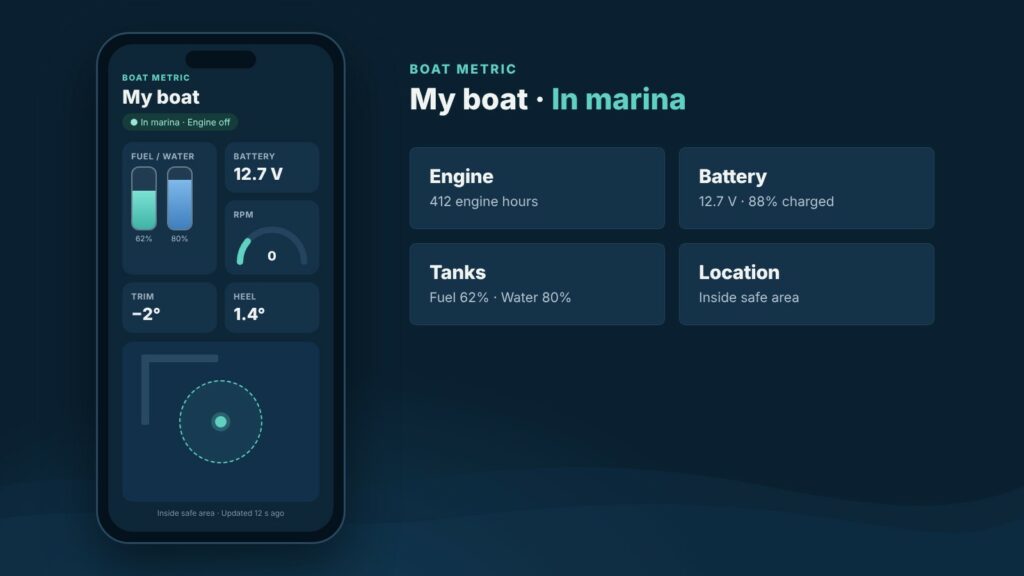
It’s a winter night and a strong northerly is blowing. Your boat is moored in a marina miles away. The same questions always come to mind. Are the lines holding, are the batteries coping, is the boat still where it should be? Most boat owners can only answer them by calling the marina or driving down to the boat the next day.
Yet the answers to these questions are usually already on board. They just can’t reach you.
Your boat knows more about itself than you think
On most boats launched today, the engines, battery monitor, fuel and water tank sensors, GPS and navigation instruments work together. They talk constantly over a shared network called NMEA 2000, publishing engine speed and temperature, battery voltage, tank levels and the boat’s position and attitude many times a second.
When you’re on board, you see some of this data on the helm display. The moment you step ashore, all of that information stays behind in the marina with the boat.
Bringing the data from your boat to your pocket
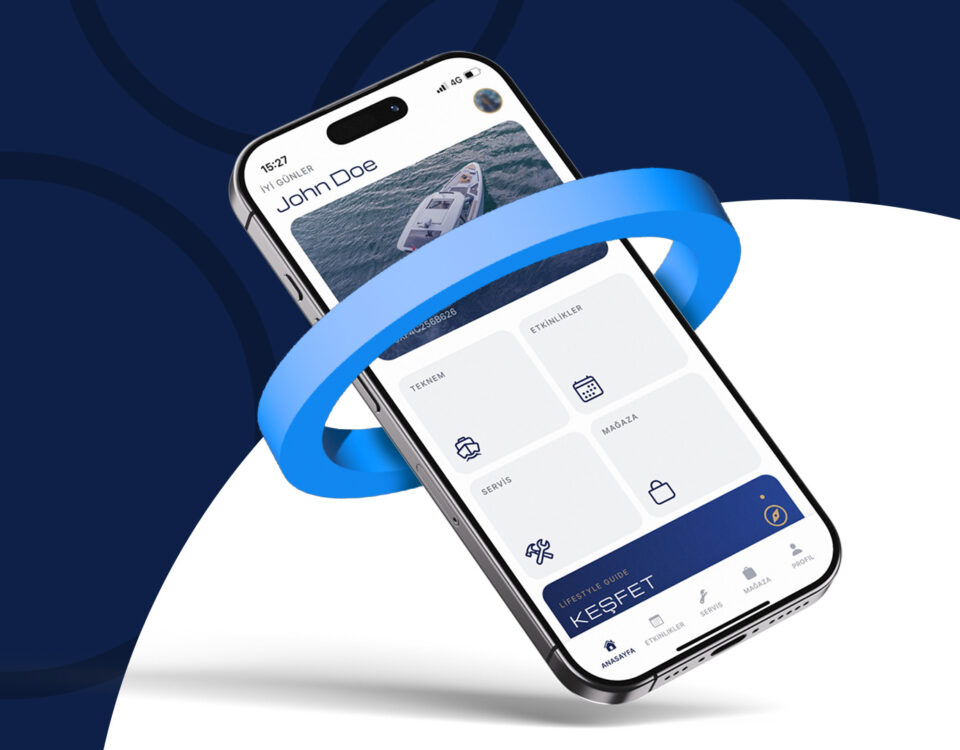
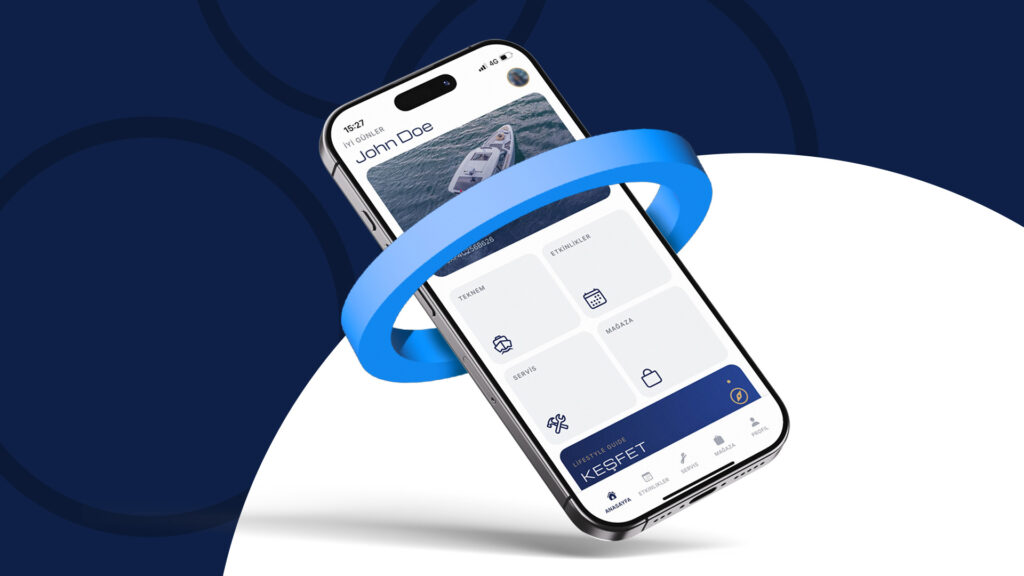
Boat Metric is the remote boat monitoring system we developed to close this gap. Hardware we designed ourselves connects to the boat’s NMEA 2000 network, reads and processes the data published by the devices on it, and sends it to the cloud over the boat’s internet connection. You see that data live in the mobile app.
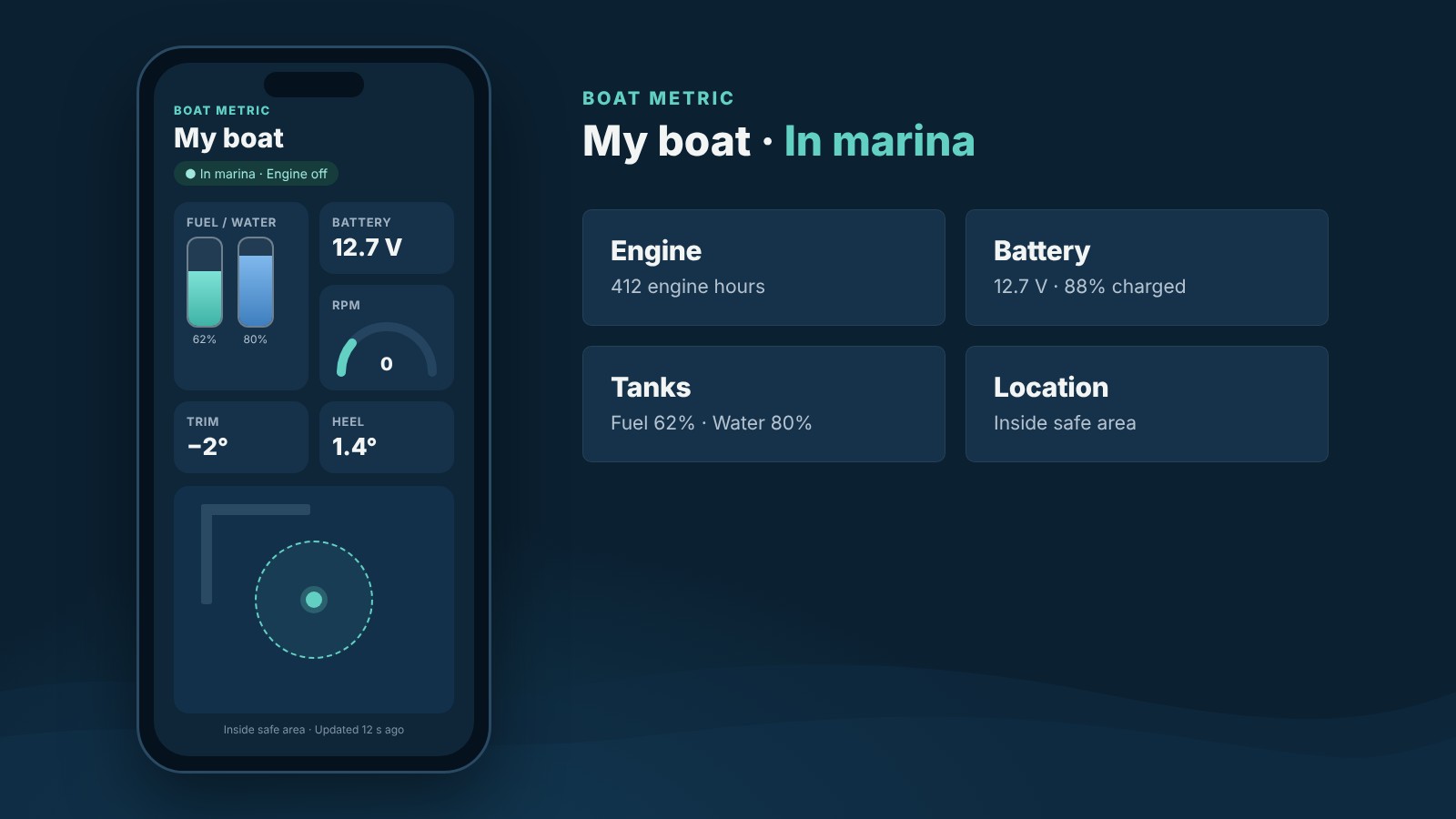
When you open the app, you can see on one screen whether the engine is running, the batteries’ state of charge, what is left in the fuel and water tanks, where the boat is on the map, the engine trim angle and how the boat is sitting. All of it comes straight from the boat’s own instruments, as it happens.
Quiet when all is well, there when you need it
The real value of a monitoring system shows up when you’re not looking at the screen. With Boat Metric, you decide when you want to hear about something.
When someone starts the engine, you get a notification. When battery voltage drops below the level you set, you know before the problem grows. You draw the area where the boat should be on the map; if it leaves that area, whether the anchor has dragged or someone has moved the boat without permission, you’re the first to know. The same goes for low fuel or an engine temperature outside its normal range.
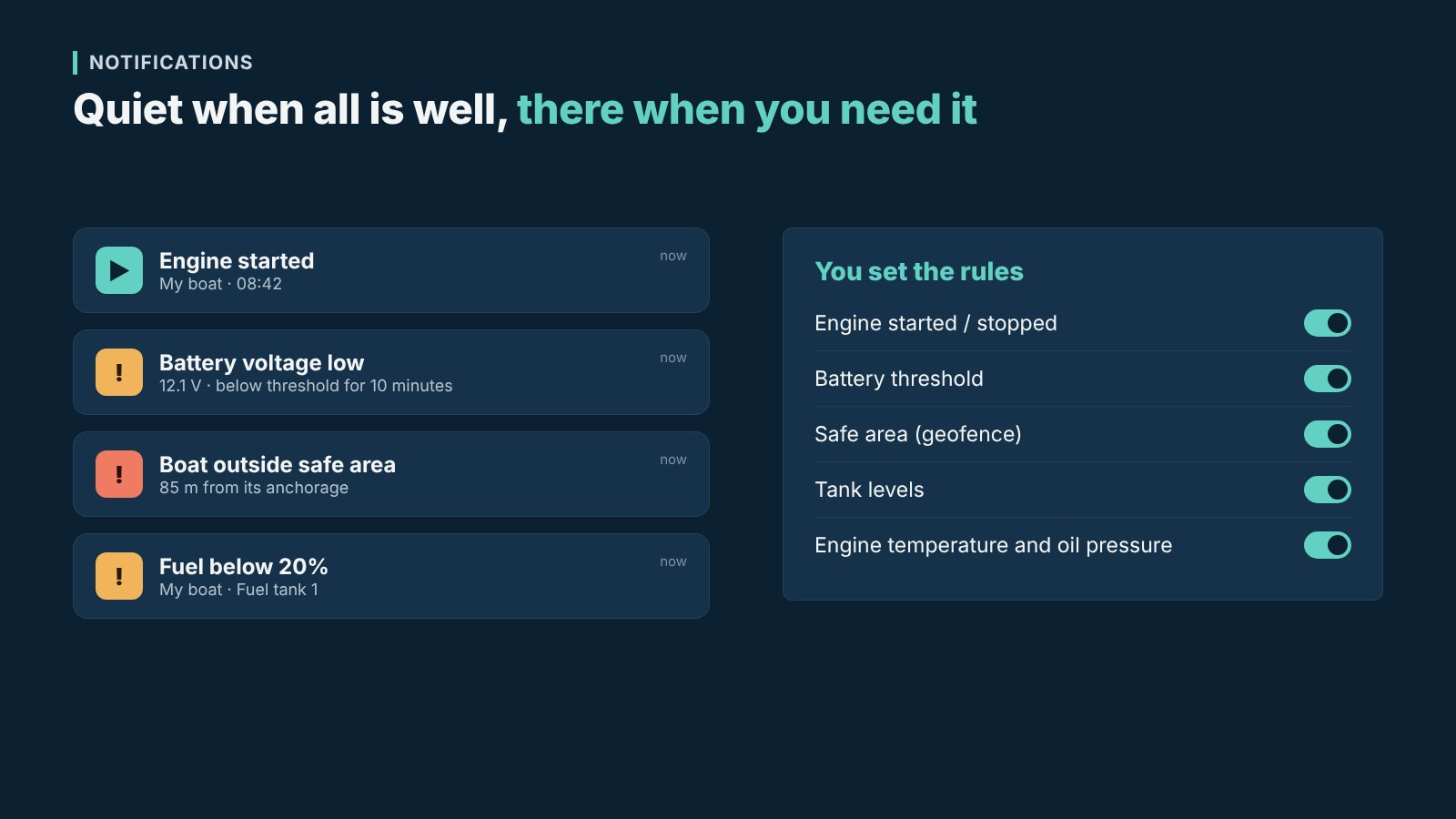
So you don’t need to keep checking your phone. The system stays quiet while everything is fine and finds you when something needs your attention.
Not just one boat, the whole fleet
Boat Metric isn’t only for owners of a single boat. Captains and yacht managers responsible for several boats, charter operators and service teams can follow the status of every boat from the same app. Which boat’s battery is weakening, whose engine hours are approaching a service, which one is under way right now, all visible at a glance. That makes it easier to step in before small issues turn into breakdowns.
Why we built our own hardware
There are various monitoring solutions on the market. We chose to develop the hardware and software together because every boat’s electronics are different. Engines and instruments from different brands use the same standard, but they don’t always publish data in the same way. Knowing the hardware inside out lets us read every boat’s data correctly and add a new sensor or a new type of alert quickly when needed.
We cover the technical side in detail in our Tech Notes: how an NMEA 2000 network works and how the data travels from the boat to the cloud.
As if you were never far from your boat
We can review the existing equipment on your boat or fleet together and decide which data you can monitor and which alerts will be useful to you. See the Boat Metric page for details, or write to us.